Reliance Jio retained its top position with the highest average data download speed of 21.9 megabit per second among 4G service providers in October, according to the latest data published by telecom regulator Trai. However, Bharti Airtel and Vodafone Idea network have been continuously recording an increase in data download speed thereby reducing the gap with the Jio network. After a marginal dip in 4G data download speed, the Jio network in October resumed the speed level of 21.9 mbps it had recorded in June, while Airtel and Vodafone Idea (VIL) have registered close to two and half times jump in data download speed on their network.

Recently, Prime Minister Narendra Modi met over 40 CEOs across broad swathes of industry, ranging from makers of mobile devices, auto components, food products to telecom networking equipment and pharmaceuticals. The agenda: To discuss how to make India an integral part of the global supply chain. The focus of the discussion would be the much touted yet not so well understood production-linked incentive scheme (PLI), the centrepiece of the government's drive to massively boost the manufacturing sector. To do so, the government has created a war chest of over Rs 197,000 crore to be paid out as incentives to over 14 industries in five years. There are three objectives to the scheme, two explicitly stated, one implied.

Reliance Jio has accused old operators, including Bharti Airtel and Vodafone Idea, of "illegally" masquerading wire-line numbers as mobile numbers for "undue enrichment".

It came as a surprise to all stakeholders - competing telecom companies (telcos), most analysts and even the government's internal projections on revenues from the 5G auctions. Reliance Jio disrupted all calculations by paying a stiff Rs 40,000 crore to buy 10 MHz of spectrum in the 700-MHz band, globally considered a key band for efficient 5G service coverage, along with the default 3.5 GHz band and the ultra-high speed and low-latency millimetre band of 26 GHz band. So what made Jio pay almost 45 per cent of its total spend in this auction for the 700 MHz band - much more than what it rustled up even for the 3.5 GHz band?

The Big Two telecom companies have accelerated their moves towards this next-gen technology, though they have chosen very different routes to getting there.
Jio Financial Services, a unit of Mukesh Ambani's Reliance Industries (RIL), got valued at Rs 1.66 trillion ($20 billion) following an hour-long special trading session conducted by stock exchanges on Thursday. Shares of RIL's unit got priced at Rs 261.85 apiece - higher than analysts' expectations of Rs 134-224 per share. The price was arrived at after calculating the difference between RIL's Wednesday (July 19) close of Rs 2,840 and Rs 2,580, the price discovered during the first-of-its-kind pre-trade session.

As many as 2,000 chips are annually designed in India by semi-conductor and fabless companies, Intel India managing director Prakash Mallya said in a conversation with Business Standard. Mallya was reiterating the importance of India in the semi-conductor sweepstakes. "As much as 90 per cent of the semi-conductor companies have a design footprint in India.

The Department of Telecom (DoT) has slapped a penalty of Rs 2,000 crore on Vodafone Idea and Rs 1,050 crore on Bharti Airtel based on sector regulator Trai's recommendation five years ago, according to sources. The DoT has given three weeks time to the telecom operators to pay the penalty, a source said while sharing the content of the demand notice served to the companies on Thursday. When contacted Bharti Airtel spokesperson said, "We are deeply disappointed with the arbitrary and unfair demand based on Trai recommendations of 2016 relating to provisions of point of interconnect to a new operator.

Reliance has around 90,000 telecom towers now, half of which are operational and owned by the RIL and rest on lease.
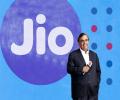
Mukesh Ambani said, by March 2017, it will cover 90 per cent of India's population

Telecom service operator Airtel on Thursday urged the government not to charge high fees for allotting 5G spectrum, saying a faster roll out of the next-generation telecommunication network can have more benefits than collecting revenue in upfront cost. Sunil Bharti Mittal, chairman of Bharti Enterprises which runs the country's second largest telco, said that there are a variety of applications across sectors ranging from healthcare to video interactions, which will make 5G a technology to be introduced as soon as possible. "5G is important and that's why we keep on requesting the government to make the 5G as an enabler for hundreds of things that we develop in the country, to keep the spectrum at affordable pricing, to not load the industry too much," Mittal said at the Times Network India Economic Conclave.

The final guidelines for raising the foreign direct investment ceiling in telecommunications to 74 per cent may be issued soon.

The Department of Telecom on Tuesday approved applications of telecom companies -- Reliance Jio, Bharti Airtel, Vodafone Idea and MTNL -- for conducting 5G trials but none of them will be using technologies of Chinese entities. The list of telecom gear makers approved for trials include Ericsson, Nokia, Samsung, C-DOT and Reliance Jio's indigenously developed technologies.

Having created businesses ranging from world's largest single-location oil refining complex to nation's largest mobile network operators in just few years, billionaire Mukesh Ambani says his group Reliance Industries Ltd will never be complacent and will grow to be among the top 10 business conglomerates of the world. Addressing employees on Reliance Family Day - the birthday of the group's founder Dhirubhai Ambani, he said Reliance is now aiming to consolidate a place among global leaders in digital data platforms and AI adoption. "Today, the domestic and global environments for business are changing very fast.
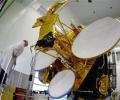
After 5 yrs, firm's offer to set up private satellites for digital push has seen some interest from Isro

'We want to prove to the world that they will get the best code written from a small place like Wayanad.'

Telecom gear makers, who are in talks with telcos, say that if all goes well, they are ready to roll out the first phase of 5G services from October this year and cover the country's top 30-50 cities (in limited areas) by March 2023. The gear makers expect the telecom companies to give them a heads-up about their plans as well as the equipment required by July, and have promised deployment in three to four months after that. India's main telecom gear suppliers are Nokia, Ericsson and Samsung.

High spectrum charges would lead to rise in mobile services rates and adversely impact government's Digital India initiative by impeding telecom network expansion.

Microsoft has become the first global Big Tech company to join the Open Network for Digital Commerce (ONDC), an Indian government initiative for developing a first-of-its-kind open network for digital commerce. The world's second-largest technology firm intends to introduce social e-commerce via its app in the Indian market later this year. ONDC is expected to open to the public in Bengaluru over the next fortnight as it enters into the next phase of the pilot for further fine-tuning before rollouts in other cities, according to a source in the know.

Disney-Star is positioning IPL as a "big-screen experience" where families and friends can come together over a game of cricket, much the way football is consumed in Europe and other parts of the world.
Surajeet Das Gupta explains why Mukesh Ambani's target is by no means impossible.

India is today the second-largest telecom market in the world with over a billion customers and close to 600 million Internet users. New connections are available on the tap, calls are virtually free and it's hard to imagine anyone without a mobile phone today. Globally, there would be few parallels to this success story that truly democratised telephony and empowered a billion-plus people, observes Airtel's Sunil Bharti Mittal.
The development marks a watershed moment in India's telecom history since fixed-line or landline connections formed the final segment where a State-owned operator was in the top spot.

Information technology major Infosys and Liberty Global, a London-based telecom firm, signed a 1.5 billion (about $1.64 billion) deal for five years to evolve and scale up the telco's digital entertainment and connectivity platforms, the companies said in a joint statement on Tuesday. As part of the expanded collaboration agreement, the size of the contract will touch 2.3 billion (about $2.5 billion) if extended to 8 years. The collaboration allows Liberty Global to realise run-rate savings of over 100 million (about $109 million) per annum, inclusive of other savings and technology investments, Infosys said in a statement.

Billionaire Mukesh Ambani's four-year-old telecom venture Reliance Jio has been ranked the fifth strongest brand globally behind the likes of Ferrari and Coca-Cola. The Brand Finance's Global 500 ranking of the strongest brands globally, which determined the relative strength of brands, is topped by WeChat, according to its annual report on most valuable and strongest global brands.
With the interconnect usage charges (IUC) regime for domestic voice calls coming to an end, Reliance Jio on Thursday said that all calls from its network to other networks anywhere in India will be free from January 1, 2021. As per the telecom regulator's directions, 'Bill and Keep' regime is being implemented in the country from January 1, 2021, thereby ending IUC charges for all domestic voice calls, it said in a statement.

In the show-cause notice, Trai said it is of the view that the claim of VIL for providing priority 4G network with faster data speeds is not in compliance with the extant regulatory framework.
The central government has mandated all ministries, public departments and public sector units to use the telecom services of State-run Bharat Sanchar Nigam Limited (BSNL) and Mahanagar Telephone Nigam Limited (MTNL).
Just a few weeks ago, Communications Minister Ashwini Vaishnaw did some tough talking with the senior managers of Bharat Sanchar Nigam Ltd, the ailing state-owned telecom service provider. The message was clear: They had to perform, quit by taking the voluntary retirement package or be compulsorily retired from service. The terse message from an otherwise polite and soft-spoken minister came just days after he announced a second and bigger package of Rs 1.64 trillion as part of a four-year turnaround plan for BSNL.
It plans to offer 4G data with voice at rates 15-25 per cent lower than those of its competitors just as it has done with its TV sets. Many say it might be a recipe for disaster.

Apple's decision to launch the eSIM-only iPhone 14 series in the US has American buyers puzzled. Surprisingly, it stumped some Indian folks, too, despite the availability of a physical SIM slot in the India-centric iPhone 14 series. This is because a large number of Apple consumers in India get their iPhones at considerably cheaper rates from the US through visiting relatives, friends, family, et al. Their apprehensions are mostly about compatibility with Indian networks and eSIM availability in India.

Reliance Industries Ltd will invest Rs 75,000 crore in rolling out 5G mobile telephony services, expanding retail network and setting up renewable energy capacity in Uttar Pradesh in the next four years, its chairman Mukesh Ambani said on Friday. Ambani also announced foray of the oil-to-telecom conglomerate into bio-energy business, converting agriculture waste into gas which can be used as fuel in industries, run automobiles or light kitchen stoves. Speaking at the Uttar Pradesh Global Investors Summit 2023 here, Ambani said his group will set up 10 GigaWatts of renewable energy capacity and roll out 5G services across the state in the next 10 months.

Reliance is leveraging the technological change of building a virtualised 5G network which would see the current hardware-dependent networks shift to software-centric platforms.

The Telecom Regulatory Authority of India (Trai) has directed the Cellular Operators Association of India (COAI) to make a presentation detailing the pros and cons of the controversial Indian 5G standard, also known as 5Gi, which the government has been pushing for. The move comes after serious differences emerged among telcos with regard to the technology's efficacy and implementation.
The government is looking at a time frame within the first two weeks of July to kick off and complete the upcoming 5G auctions, according to discussions between officials and stakeholders. It is expected that the Telecom Regulatory Authority of India (TRAI) will give its recommendations on the base price by March, after which the necessary cabinet clearances will be given. The Department of Telecommunications (DoT) had earlier looked at undertaking the auction in the first quarter of 2022 but decided to push it back. Communications Minister Ashwini Vaishnaw had also said that the auctions are likely to take place in April-May.
Experts argue that the cost savings both in terms of capex as well as operating costs can be substantial in the next one to two years.

Discussing the prospect of more reform earlier this month, telecom minister Ashwini Vaishnaw announced a delay in the 5G spectrum auction. India's telecom sector regulation has to be benchmarked with the global best, he said. It's another matter that many countries have either introduced or are about to roll out 5G services that will enable cutting-edge tech in diverse areas. For India, too, it will mean a lot for healthcare, robotics and unleashing a new chapter in Digital India perhaps.

Despite enduring a weak first quarter of the 2023-24 financial year (Q1FY24), Power Grid Corporation (PGCIL) has laid out an ambitious capex plan going forward. It is looking to invest around Rs 1.8 trillion on an existing asset base of Rs 2.7 trillion to aim at keeping over 50 per cent market share in the transmission market. This includes opportunities from the Rs 2.4 trillion green energy corridor.

DoT is even considering measures to urge private telecom operators to bring down their dependence on Chinese-made telecom equipment.
Telecom major Jio will start the beta trial of 5G services in four cities of Delhi, Mumbai, Kolkata and Varanasi from October 5 with a select set of customers, the company said on Tuesday. The company will send invites to customers under 'Jio True 5G Welcome Offer' to try its 5G services and the subscribers will get Unlimited 5G data with up to 1 gigabit per second speed. "Post the successful demonstration of its True-5G services at the India Mobile Congress 2022, Jio is announcing the Beta trial of its True-5G services on the auspicious occasion of Dussehra, for Jio users in four cities - Mumbai, Delhi, Kolkata, and Varanasi," Jio said in the statement.
